
IAQ IQ, Summer 2026
©2026 Jeffrey C. May
A Seller may include some furniture in a house, and a house may have carpeting in bedrooms, on stairs, or in a hallway. These may seem like advantages to a buyer, but such ‘second hand stuff’ can cause indoor air quality problems. There may also be conditions in a home that are not so readily visible but that can still be problematic for people with allergies, asthma, or other environmental sensitivities.
For example:
1. Cat allergens: If a Seller has a cat and has been using kitty-litter that is corn-based, some of the kitty-litter will dry out and be aerosolized. Cats have allergens in their saliva, their sebaceous (skin) gland secretions, and in their urine. I have taken air samples in homes where corn-based kitty-litter is being used and have sometimes found cornstarch granules in the air, regardless of where the kitty-litter box is located. If those cornstarch granules are coated with dried-up cat urine, I believe that they could be surrogate allergens (just as cornstarch donning powder for latex gloves was a surrogate allergen for people with latex allergy).
2. Carpets: Carpets fibers can hold up to 70 times more dust than solid flooring can, and even with the most thorough HEPA vacuuming, some of that dust will remain. If the carpets become damp from foot traffic, spilled food, water, or improper carpeting cleaning, microbial growth can ensue.
And carpets in finished basements? A recipe for disaster, in my opinion. Many kinds of mold, including allergenic Aspergillus and/or Penicillium, can grow in conditions of elevated relative humidity (RH): over 80% in below-grade spaces. Almost every basement carpet I have sampled contained mold growth.
3. Furniture: Antiques can have mold growth on the backs and bottoms. I’ve often found mold growth on the leaves of antique drop-leaf tables, perhaps because at some point they were stored in damp basements or garages.
4. Mechanical equipment: Fibrous lining material on an access panel or inside a blower cabinet captures dust that is often the fodder for mold growth. An air handler inside a closet with a closet return could be entraining air from the ceiling plenum if there are any gaps or openings in the ceiling, such as around pipes or ducts. That air could contain odors (especially from cigarette smoke) and allergens coming from other units in a multi-unit building. In a single family, the air could contain allergenic dust. A buyer should know when the ducts and any air handler have been inspected and cleaned. Mini-splits have nearly useless filtration and can house mold growth, so they should be inspected at least annually and cleaned as needed.
5. Pests:
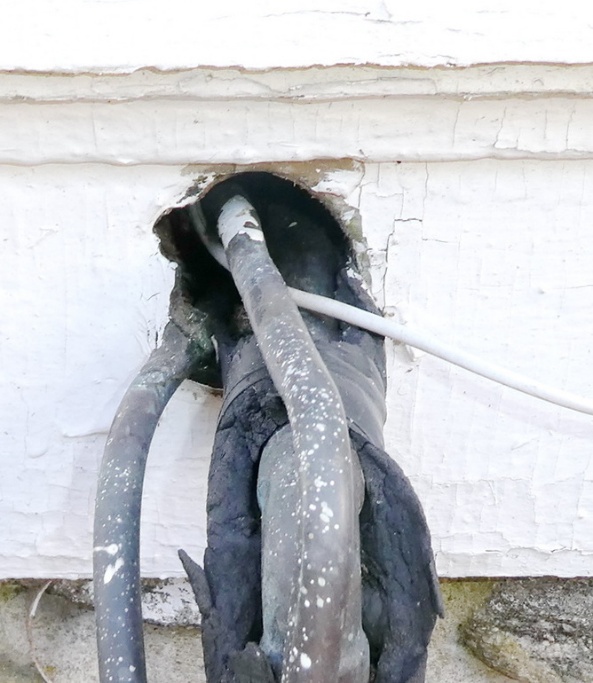
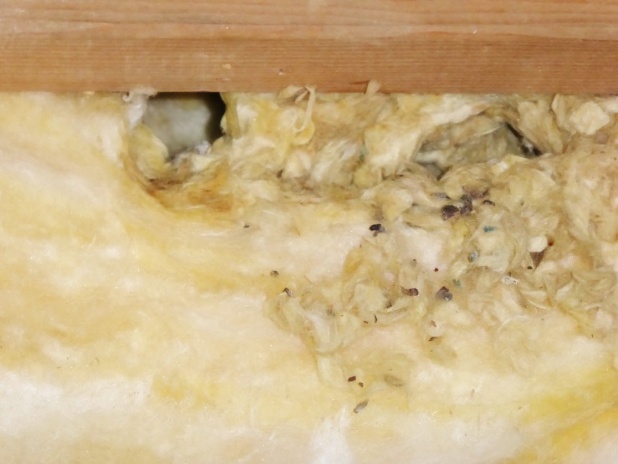
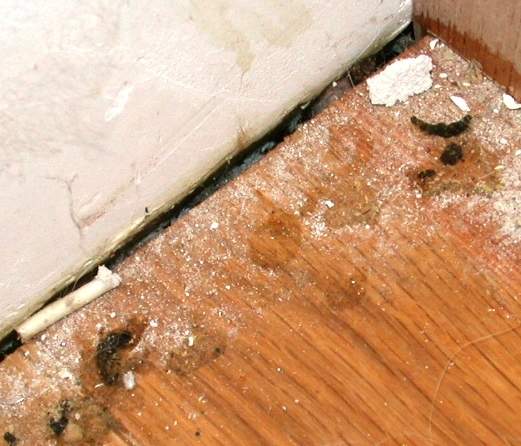
Mice: A correlation has been drawn between elevated levels of mouse-urine allergens indoors and exacerbated asthma symptoms. Evidence of a mouse infestation can include mouse droppings, mouse-urine trails, and burrows in exposed fiberglass (mice like to nest in the stuff). And to get into a wall or ceiling cavity, a mouse can slither through the smallest spaces, even those around piping leading from an outdoor A/C condenser into a house.
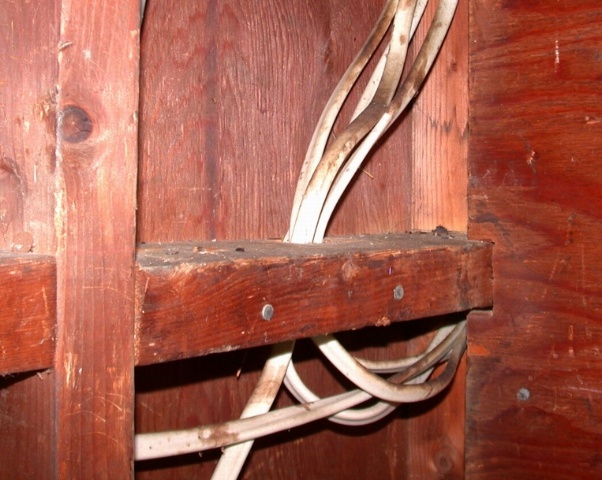
Shrews: Shrews are the size and color of mice, but they eat meat including mice. They also have an overpowering musk and defecate and urinate in piles that become moldy. Many people have called indoor air quality professionals, because they think they have mold growth problems rather than pest infestations in their homes. I’ve found shrews nesting in wall cavities and even above drop ceilings.
Ants: A lot of carpenter ants near or inside a house can suggest rotting wood somewhere, as carpenter ants nest in the stuff.
Case studies: One of my clients noticed a lot of carpet ants in her kitchen addition. And why? Because the gutter system hadn’t been properly designed or maintained, so roof water was flowing down the siding of the addition, resulting in water entry into wall cavities.
In our own house, for several years in the spring we had a lot of ants scurrying around in our kitchen. They were nesting in the hollow plastic tops of a wood, plastic-encased posts on our back deck, which was outside the kitchen area.
Bees and wasps: In one home I inspected when I was a home inspector, I noticed a slight bubbling in the paint above a sliding door. I accidently touched that spot when pointing it out to my client, and a section of that wall caved in. There had been a beehive in that wall, and in expanding the nest, the insects had removed most of the gypsum in the drywall, leaving only the paper and paint. Outside the door was a hole in the siding where bees had exited and entered. Luckily for me, the hive was no longer active.
Case study: We also had a problem with yellow jackets in a house we used to own. They had nested inside a wall cavity in our back entranceway. It seemed as if armies of them flew in and out, and sometimes we’d even find one or two of them bumping against windows in our bedroom above that area of the house. My wife Connie is terrified of bees and wasps, so I called a PCO who said he’d be there in three or four days to take care of the problem. I came home from work the next afternoon and found a note from Connie on the kitchen table. “I’ve moved into the Marriott,” she had written, “and will come home when the nest is gone.” When I explained the situation, the PCO laughed and said he’d be there the following day.
So what might all this mean to a home inspector?
- This information might be helpful if you include pest inspections in your services.
- It may be worth asking a buyer if he or she has allergies, asthma, or other environmental sensitivities. If the answer is yes, you might recommend that the person hire a pest inspector (if you don’t offer that service) or an indoor air quality professional (and put that in writing?)
- I hope that your contract includes a description of the services that you don’t provide. I have heard of cases in which the Plaintiff’s case was weak but the insurance company buckled, because it was less expensive than covering an insured’s legal fees. I gave up my home inspector license when I transitioned into indoor air quality work, so perhaps the Massachusetts licensing law protects home inspectors in this regard. I hope so!