
IAQ IQ, Summer 2025
©2025 Jeffrey C. May
Gas leaks and combustion spillage can affect the health of building occupants. This is why I recommend that both a home inspector and an indoor air quality investigator own a Bacharach Monoxor carbon monoxide (CO) detector as well as a TIF8800A (or the newer version, the TIF 8800X) combustible gas detector (which detects combustion spillage and even vapor trails, but is not responsive to CO).
Here are some case studies that illustrate why I am making those recommendations.
The CO stove: One woman called me because she and her son experienced frequent headaches in the home where they both lived and worked. They drank many cups of tea during the day. They always heated the kettle for the tea water on the left rear burner, and there was no exhaust over the stove. I measured the CO concentration with the Monoxor just above the gas flame of the burner, and the concentration pegged the meter at over 2,000 ppm! The kitchen was part of a large open space under an atrium ceiling, and the offices were upstairs off the loft. CO was carried in the warm air from the stove up into the loft and offices. Until the flame on the left rear burner was adjusted, the woman and her son switched to using another burner that did not produce much CO.
In a similar situation in a home where the occupant was sensitized to combustion products, I used the Monoxor to measure the CO concentration about 12 inches above the gas flame of a stove; the instrument indicated an “acceptable” CO concentration of about 10 ppm. After I placed a pot containing a few inches of water on the burner and the flame geometry was disturbed, the CO concentration above the pot pegged the Monoxor above 2,000 ppm. Again, the burner needed a gas/air adjustment.
Implication for a home inspector: It’s a good idea to test each burner on a gas stove without a pot on it and then with a pot with a little water in it to see how much CO is being emitted.
The automatic draft control: One young couple had just bought a house and moved in that summer. The house had a basement that contained a finished family room and an adjacent mechanical room. A half wall without a door separated these two spaces. Sometimes when the couple sat in the finished room, they smelled something and felt ill. They had called the Fire Department and an HVAC company, and no one had been able to figure out the problem.
When I entered the mechanical room, I immediately smelled combustion products and confirmed with my TIF8800A that the boiler was leaking those products at the draft diverter. The boiler had an automatic draft control, which was closed when the boiler was off, but the hole in the damper was not large enough to create sufficient draft for the combustion products from the pilot light. Pilot flames often undergo incomplete combustion and release carbon monoxide and other partially degraded chemicals. I recommended that they eliminate the automatic draft control or install a spark ignition.
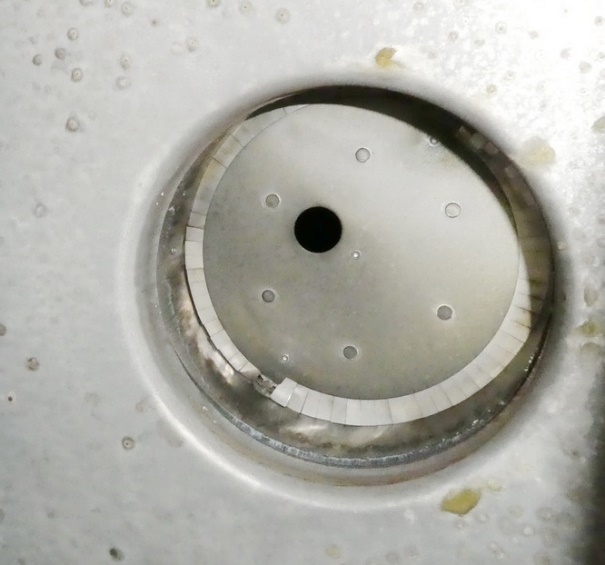
Implications for a home inspector: Consider testing a boiler to be sure it’s not venting combustion products into a mechanical room. You can use a combustible gas detector or even a mirror, which will fog in the presence of significant combustion spillage.
The sickening laundry room: For about five years, Connie and I drove to Florida in the winter to spend a month in the sun. One year we received a call from a woman who said that often when she did the laundry, she felt ill. She added that the washer and dryer were in the mechanical room, where a large gas boiler was also located. She happened to live within a half hour of our route south, so we stopped by her home.
As soon as I drove up to the house, I guessed what the problem was. There was an interior corner where a large attached garage was attached perpendicular to the left of the front door, and the home had an ample roof overhang. I could see two vents extending out of the siding close the ground: one pipe for the exhaust of the direct-vented boiler, and the other pipe for the fresh-air intake for the mechanical room. The two pipes were at the same level and were about a foot apart. As a result, the fresh-air intake was entraining combustion products (containing CO), especially when the wind was blowing against that side of the house. The solution? Move the pipes so that the fresh air intake was far from the boiler exhaust pipe.
Implications for a home inspector: Make note if you see an air-intake pipe and an exhaust pipe located near each other and at the same level. The same concern holds true if the exhaust pipe is located under a window. Open the window? No!
The dangerous wood stove: When our children were little, Connie and I used to own a small cabin in Vermont near where her parents lived. The cabin’s only heat sources was a small, “air-tight” wood-burning stove, so we only used the place from early spring to late fall. One early November weekend when we were there, I woke up in the middle of the night and felt dizzy, nauseous, and disoriented. A cigarette-sized stream of smoke was blowing out of a small hole in the wood stove’s observation port. There was a hill rising up at the rear of the cabin. It was a cold windy night, and wind was blowing down the hill. The stovepipe wasn’t tall enough above the roof, so the stove was back-drafting. There was a small window near the stove. I opened the window about a half inch, and immediately the back drafting stopped. We then raised the vent pipe further above the roof, preventing this problem from happening again.
Air flows from higher pressure to lower pressure. The wind had increased the air pressure outside the cabin, causing the stove to back draft. As soon as I opened the window, air flowed into the cabin, increasing the air pressure inside, which stopped the back drafting.
Implication for a home inspector: Be sure to check the height of an exhaust pipe at the roof, especially if the house is located in the middle of or at the bottom of a hill.
The sick hospital: I was asked to investigate potential sources of a building odor in a hospital. A number of nurses had complained about the odor, and several said that the odor made them feel sick. A number of professionals, including industrial hygienists and architects, had not been able to figure out the potential odor source(s), so the patients and medical staff had been moved to another building, leaving the hospital vacant in order to make some renovations and to install more CO detectors. The hospital was then reoccupied, but the nurses again complained of feeling sick, so the building was vacated again, and plans were in place to tear the hospital down and rebuild in what would be a multi-million dollar project.
I was called as a last resort before the wrecking ball arrived. A group of about eight professionals, including hospital administrators, industrial hygienists, and an architect, met me when I arrived. They were all professionally dressed and looked rather bored. We all sat down, and they then began to pontificate about how many people had tried to figure out the cause or causes of the odor, who they were, and the testing that had been done. They also grilled me about what testing I would be doing. After about half an hour, I suggested that I start to walk around and see if there were any obvious problems. They all followed me, looking restless but trying to be polite. Whenever I asked a question, the answer was invariably “We’ve looked into that,” or “We’ve done that.”
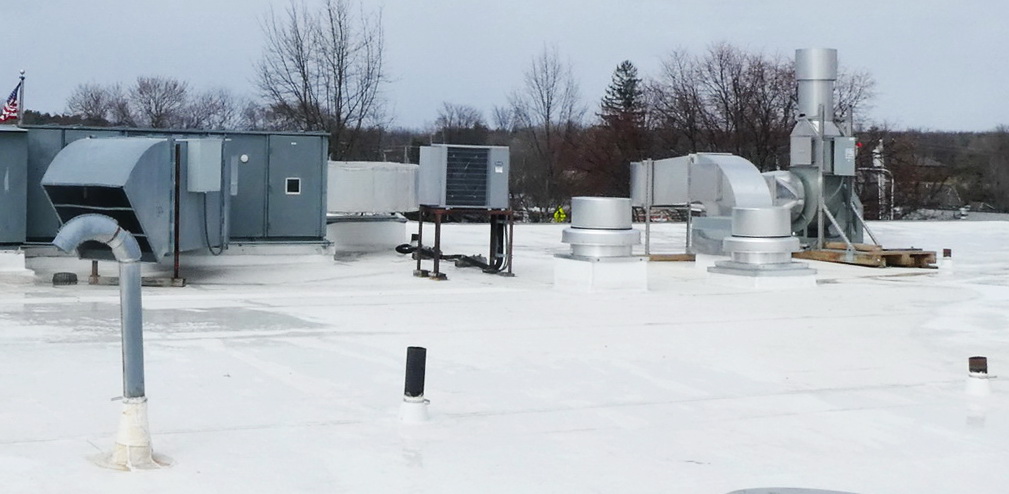
I noticed that there was a supply near the nurse’s station, where several people had reported that the odor was very strong. I went up onto the roof, where I saw that the many sewer vent pipes for the building terminated about six inches above the flat roof and lower than the nearby fresh-air intakes for the roof-top units. As a consequence, under some weather conditions sewer gas was being entrained into the HVAC system. By then several people in the group had left, and only two or three remained, but their interest was piqued. “No one ever thought of that,” one of them said. The hospital is once again operating after the heights of the sewer vent pipes were raised.
Implications for home inspectors: First, we know a lot more practical information about buildings than other building professionals might know. And second, home inspectors could apply their skills and knowledge to try to identify sources of problems in other types of buildings.
News Box
The Maine Indoor Air Quality Council (MIAQC) is holding an all-day conference on Tuesday December 9th in Portland, ME. I am giving a talk titled “Moisture and Leak Investigations”: a topic relevant to both indoor air quality professionals and home inspectors. I have attended a number of these conferences, and a number of home inspectors usually attend. maineindoorair.org/
Connie’s memoir of growing up in an alcoholic family, titled “A Parade of Drunks,” was recently
published by Onion River Press and is available on Amazon and through Phoenix Books:
https://www.phoenixbooks.biz/book/9781957184869.